Blog June 10, 2026 • 3 min read When people hear “AI in mortgage,” they usually think about speed-faster loan processing, faster document review, and accelerated approvals. But in reality, the industry is facing a much bigger question: Can we truly trust the AI handling our borrowers’ most sensitive information? The Reality of the Digital […]
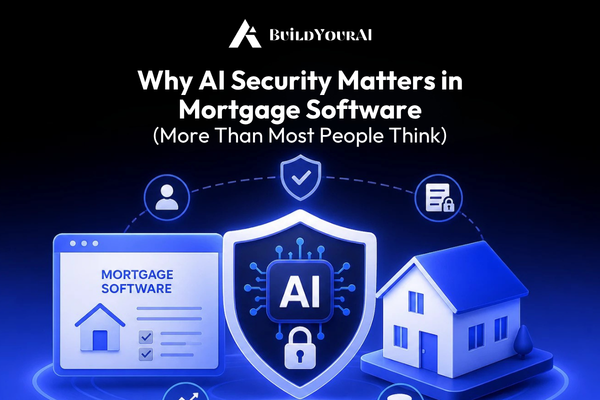
When people hear “AI in mortgage,” they usually think about speed-faster loan processing, faster document review, and accelerated approvals.
But in reality, the industry is facing a much bigger question: Can we truly trust the AI handling our borrowers’ most sensitive information?
The Reality of the Digital Mortgage Journey
Think about a standard mortgage journey. A borrower uploads pay stubs, tax returns, bank statements, government IDs, credit histories, and employment verification documents. Now, imagine an AI system assisting a loan officer by reading those files, extracting data, highlighting missing information, and summarizing financial risks.

The high-stakes nature of mortgage document workflows. Source: YinYang / Getty Images
Sounds like a dream workflow, right? But it introduces a critical layer of risk.
What happens when the AI gets it wrong? Consider these highly plausible scenarios:
Formatting Flaws: A borrower’s income is miscalculated simply because of a formatting anomaly in a tax document.
Data Leaks: Sensitive customer data is exposed through weak or unencrypted AI integrations.
Blind Trust: An AI recommends an approval or denial, and a processor blindly trusts the output without verification.
Misleading Advice: An automated chatbot provides mortgage guidance that is incomplete, inaccurate, or non-compliant.
In the mortgage industry, even a minor oversight can trigger severe compliance penalties, shatter customer trust, or cause costly operational delays.
Moving Beyond the “Black Box”
This is exactly why AI security and continuous auditing are non-negotiable. At a practical level, mortgage AI cannot behave like an unexplainable “black box.” Lenders need absolute confidence that their systems are secure, auditable, and monitored.
Demystifying the AI ‘Black Box’ for better compliance and trust. Source: Olemedia / Getty Images
Before deploying any AI tool, every mortgage company should ask four critical questions:
Data Protection: Is borrower data fully protected and isolated securely?
Explainability: Can we clearly trace why the AI generated a specific recommendation?
Human-in-the-Loop: Is there a strict human review process for critical mortgage decisions?
Validation: Are we actively validating AI outputs instead of assuming they are always correct?
The Golden Rule: Good mortgage AI should act like a brilliant assistant, never an unsupervised decision-maker.
Balancing Automation with Human Expertise
When deployed correctly, AI is incredibly powerful. It excels at heavy lifting:
Summarizing complex borrower documents for processors.
Detecting missing paperwork early in the cycle.
Flagging inconsistencies in income or employment records.
Helping loan officers respond instantly to routine borrower inquiries.
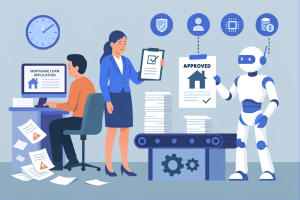
The ideal balance: AI automation supporting human decision-making. Source: ProPair
However, final lending decisions, compliance checks, and exception handling must remain firmly in the hands of human experts.
The companies seeing the highest ROI aren’t just adopting AI to cross the finish line faster. They are deploying it responsibly; combining automation, ironclad security, compliance guardrails, and human oversight to elevate the borrower experience without compromising trust.
In mortgage technology, speed matters. But trust matters more.
Is your mortgage AI secure and compliant?
Don’t leave your data security to chance. Ensure your systems are protected, compliant, and auditable by scheduling a specialized assessment today.
👉 Get Your AI Security Audit Now